Seeing where in the world my work has been used
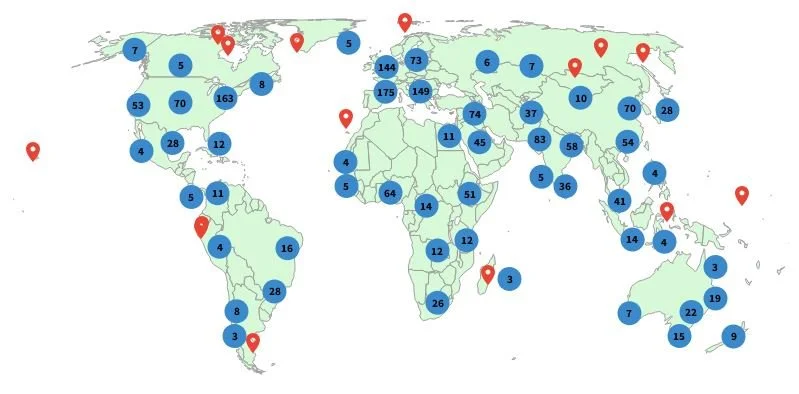
The map above was on the Web of Science, and it shows where my research has been cited around the world. The total number of citations themselves weren’t the most interesting part, but what caught my attention was how widely spread they are.
When I’m working on a paper, most of the time it’s me and my collaborators, the data, some code, and a lot of revisions. It’s easy to forget that once a paper is published it starts a life of its own. Other people read it, test the ideas, adapt the methods, and sometimes apply them in laces and contexts you never expected.
Seeing the global map of my citations was a nice reminder of that. Papers I and my coauthors wrote while thinking about one landscape or one technical problem have ended up being used in many different parts of the world. That’s one of the quiet rewards of academic work.
For context, my papers have around 2,500 citations in total. I’m not entirely sure how that compares to other early career researchers in the field of remote sensing and geospatial ecology, but the number itself matters less to me than the pattern behind it. The spread suggests that the work has been useful across different regions and research communities.
In the end, that’s really the goal. I really do believe in the notion that research, in and of itself, isn’t just about producing papers but rather about contributing something that others find useful and maybe build upon. Seeing the global spread of my citations makes the effort well worth it.